Kids Learn Language Through Stories: Why Narratives Work
Why Stories Work: The Science Behind Narrative and Language
Narrative Structure Supports Memory
Furthermore, stories follow a predictable pattern: characters face problems, take actions, and experience consequences. This structure, which researchers call a story grammar, provides a scaffold that helps children process and remember new information.
Moreover, mandler and Johnson (1977, “Remembrance of Things Parsed: Story Structure and Recall,” Cognitive Psychology) demonstrated that children as young as four use story structure to organize memory. When information is embedded in a narrative, children recall it more accurately and for longer periods than when the same information is presented as isolated facts.
Additionally, for language learning, this matters enormously. Vocabulary and grammar encountered within a story have built-in context and emotional associations. A child who learns the word “brave” through a character’s courageous action remembers it more deeply than a child who memorizes it from a vocabulary list.
Emotional Engagement Drives Acquisition
However, stories generate emotions. Children feel suspense, joy, sadness, and excitement as narratives unfold. This emotional engagement is not merely pleasant. It actively supports learning.
Therefore, schumann’s Stimulus Appraisal Theory (1997, “The Neurobiology of Affect in Language,” Language Learning) proposed that emotional responses to language stimuli directly influence how deeply those stimuli are processed and retained. When children care about what happens to a character, they process the language used to describe those events more thoroughly.
Furthermore, Krashen (1982, Principles and Practice in Second Language Acquisition) argued that anxiety inhibits language acquisition, while positive emotional states facilitate it. Stories create a low-anxiety environment. Children are not being tested or evaluated. They are simply engaged in a narrative. This emotional safety allows the language acquisition process to proceed without the interference of stress.
Repetition Without Boredom
In other words, children famously love hearing the same story over and over. Parents may tire of reading the same picture book for the twentieth time, but each repetition serves a purpose. Repeated exposure to the same text provides exactly the kind of spaced, contextualized input that vocabulary acquisition requires.
As a result, horst, Parsons, and Bryan (2011, “Get the Story Straight: Contextual Repetition Promotes Word Learning from Storybooks,” Frontiers in Psychology) found that children learned more words from stories they heard three times than from stories they heard once. Crucially, children did not resist the repetition. They actively enjoyed it. Stories make repetition a feature rather than a chore.
Research on Story-Based Second Language Learning
Consequently, the theoretical advantages of stories are supported by direct research on second language learning in children.
Story-Based Programs Outperform Traditional Methods
Likewise, elley and Mangubhai (1983, “The Impact of Reading on Second Language Learning,” Reading Research Quarterly) conducted a landmark study in Fiji. They compared three groups of primary school children learning English: one using a traditional audio-lingual method, one doing shared book reading, and one doing sustained silent reading. After two years, both reading groups significantly outperformed the traditional group in reading comprehension, writing, and grammar.
Meanwhile, the shared book experience group, where teachers read stories aloud and discussed them with children, showed the strongest gains. This finding highlights the power of combining stories with interaction.
Storytelling Builds Vocabulary Effectively
In fact, collins (2005, “Storybook Reading with Preschoolers: Evidence of a Vocabulary Acquisition Effect,” Journal of Educational Psychology) studied 4-year-old Portuguese-speaking children learning English in the United States. She found that reading storybooks aloud, with brief explanations of target words, produced significant vocabulary gains. Children who heard stories with embedded vocabulary instruction learned nearly twice as many words as children who heard the stories without explanations.
For example, similarly, Silverman (2007, “Vocabulary Development of English-Language and English-Only Learners in Kindergarten,” The Elementary School Journal) demonstrated that a story-based vocabulary program was effective for both native English speakers and English language learners in kindergarten. The approach narrowed the vocabulary gap between the two groups.
Stories Develop Grammar Implicitly
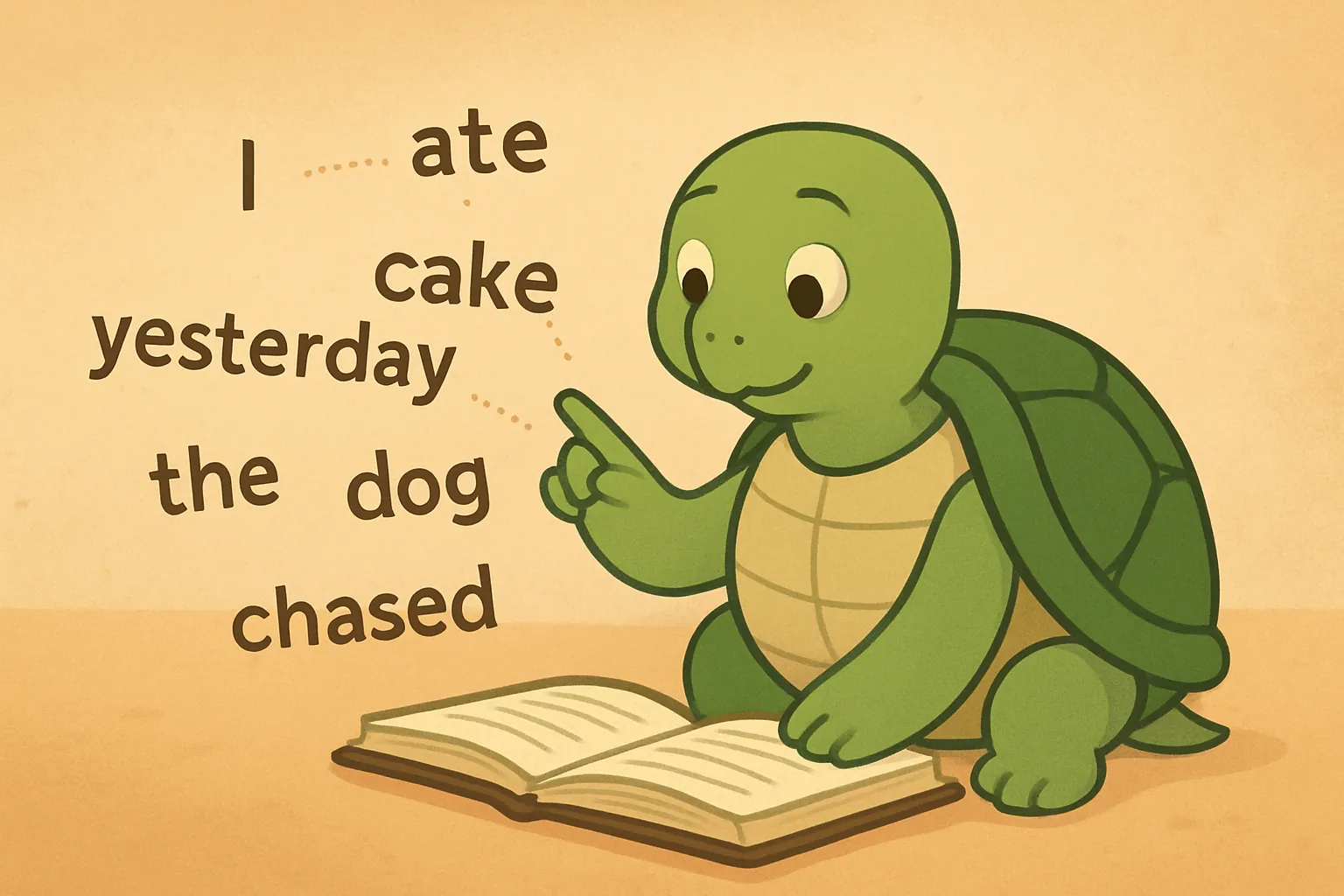
Furthermore, lichtman (2016, “Age and Learning Environment: Are Children Implicit Second Language Learners?,” Journal of Child Language) found that children are more effective implicit learners than adults. They absorb grammatical patterns from input without needing explicit explanations. Stories provide exactly the kind of rich, meaningful input that implicit grammar learning requires.
Moreover, when children hear a story that naturally uses past tense throughout, they absorb the pattern of past tense formation without being taught the rule. Over many stories, these patterns consolidate into implicit grammatical knowledge.

Age-Appropriate Approaches
Additionally, children’s cognitive abilities, attention spans, and learning styles change significantly across age groups. Effective story-based language learning looks different for a 4-year-old, an 8-year-old, and a 12-year-old.
Ages 3 to 6: The Foundation Years
However, young children learn language primarily through sound, rhythm, and repetition. Their attention spans are short, but their capacity for implicit learning is at its peak.
Therefore, Effective strategies:
- In other words, Picture books with simple, repetitive text. Books with a repeated phrase or sentence pattern allow children to predict and eventually “read along.” The predictability provides scaffolding for new vocabulary.
- As a result, Read-aloud sessions with physical engagement. Point to pictures. Use different voices for different characters. Ask simple questions: “Where is the cat?” “What color is the house?” This interaction deepens processing.
- Consequently, Songs and rhyming stories. Rhythm and rhyme support phonological memory. Children learn chunks of language through songs more easily than through prose. Nursery rhymes in the target language are particularly effective.
- Likewise, Short sessions, high frequency. Five to ten minutes of story time, multiple times per day, works better than one long session. Young children learn through frequent, brief exposure rather than extended study.
- Meanwhile, Wordless picture books. These allow a parent or teacher to narrate in the target language at the child’s level. The images provide meaning, while the adult provides the language.
In fact, at this age, do not worry about comprehension of every word. Children absorb the sounds, rhythms, and patterns of a language well before they understand every word. Exposure builds the foundation for later comprehension.
Ages 7 to 10: Building Fluency
For example, children in this age group develop stronger reading skills, longer attention spans, and more sophisticated narrative comprehension. They can follow multi-chapter stories and engage with more complex plots.
Furthermore, Effective strategies:
- Moreover, Chapter books at the right level. Choose books where the child understands approximately 90% to 95% of the words. Some challenge is good, but too much leads to frustration and abandonment. Graded readers designed for language learners are ideal.
- Additionally, Read-aloud combined with independent reading. Start a book as a read-aloud, then let the child continue independently. This scaffolding technique builds confidence and transfers reading skills.
- Story-based discussion. After reading, discuss the story in the target language. Ask prediction questions: “What do you think will happen next?” Ask opinion questions: “Was the character right to do that?” These discussions develop speaking skills alongside reading.
- Retelling activities. Ask children to retell the story in their own words. This shifts language use from receptive to productive. It also helps children internalize narrative structure, which supports both language and literacy development.
- Series books. Children who enjoy a series (like Magic Tree House or Diary of a Wimpy Kid in simplified versions) encounter recurring vocabulary across multiple books. This built-in repetition accelerates vocabulary acquisition.
At this age, children also begin to develop metalinguistic awareness. They can start noticing patterns in the language: “In this language, the adjective comes after the noun!” Encourage these observations without turning them into formal grammar lessons.
Ages 11 to 14: Deepening Engagement
Pre-teens and early teens can engage with complex narratives, understand figurative language, and appreciate literary devices. They are also developing stronger identities and preferences, which means choice becomes critical.
Effective strategies:
- Let them choose their own books. Motivation is the most important factor at this age. A child who reads a book they chose will learn more than a child forced through a book someone else selected. Offer options, but let the child decide.
- Young adult literature in the target language. YA novels deal with themes that resonate with this age group: identity, friendship, conflict, and adventure. Reading about relatable experiences in the target language builds both language skills and personal connection to the language.
- Graphic novels and comics. These are not lesser reading material. They provide visual context that supports comprehension. For reluctant readers, graphic novels can be the entry point that builds a reading habit. Many graphic novels also use authentic, colloquial language that textbooks often omit.
- Digital stories and interactive narratives. This age group is comfortable with technology. Interactive stories, choose-your-own-adventure formats, and digital reading platforms maintain engagement. TortoLingua, for instance, uses story-based approaches designed to keep learners of this age group engaged while building language skills.
- Creative writing. Encourage children to write their own stories in the target language. Even short narratives (a paragraph or two) push productive language use and consolidate vocabulary and grammar learned through reading.
At this age, some explicit grammar discussion can complement story-based learning. When a child notices a pattern in a story, briefly explain the rule behind it. Keep explanations short and always connect them back to the story context.
A Practical Guide for Parents
Knowing why stories work is the first step. Implementing a story-based approach at home requires practical planning.
Build a Home Library in the Target Language
Access to books is one of the strongest predictors of reading habits. Krashen (2004, The Power of Reading) found that children who have books available at home read more, and more reading leads to stronger language skills. Invest in a collection of picture books, graded readers, and eventually chapter books in your target language.
If finding physical books is difficult, digital libraries and e-book platforms can fill the gap. Many public libraries also carry books in languages other than English.
Establish a Daily Story Routine
Consistency matters more than duration. A 10-minute bedtime story in the target language every night produces more cumulative exposure than an occasional hour-long session. Build story time into your daily routine, and protect it from interruptions.
Use the Language of the Story Beyond the Book
After reading a story about animals at the zoo, use animal vocabulary throughout the day. Point out animals in real life. Play pretend games using characters from the story. This extension of story language into daily life reinforces vocabulary and shows children that the language has real-world relevance.
Do Not Test. Engage.
Resist the urge to quiz children on vocabulary or grammar from stories. Testing creates anxiety, which Krashen identified as a barrier to acquisition. Instead, engage naturally. Comment on the story. Express your own reactions. Ask genuine questions. When children feel that story time is about shared enjoyment rather than assessment, they relax, and acquisition happens more effectively.
Model Enthusiasm
Children are highly attuned to adult attitudes. If a parent shows genuine enthusiasm for stories in the target language, children absorb that attitude. Read with expression. Laugh at funny parts. Show curiosity about what happens next. Your emotional engagement signals to the child that this language, and these stories, matter.
Recommended Story Sources
Finding appropriate stories in a target language can be challenging, especially for less commonly taught languages. Here are some types of resources to explore:
- Graded reader series: Major publishers (Oxford, Cambridge, Penguin) produce graded readers in many languages. These are written specifically for language learners and control vocabulary and grammar levels.
- Bilingual picture books: Books that present the story in two languages side by side allow parents to support comprehension while maintaining target language exposure.
- Audiobook versions: Listening to stories while following along with text develops both reading and listening skills. Many graded reader series include audio recordings.
- Traditional folk tales: Every culture has folk tales and fairy tales. These stories often use simple, repetitive language and deal with universal themes. They also connect children to the cultural heritage of the language.
- Digital platforms: Apps and websites that offer story-based language learning provide convenience and often include interactive features that increase engagement.
The Story Advantage
Stories align with how children’s brains naturally learn. They provide context, emotion, repetition, and structure in a format children already love. Research consistently shows that story-based approaches produce stronger vocabulary gains, better grammar acquisition, and higher motivation than traditional methods.
For parents raising bilingual children or supporting a child’s second language learning, stories are not just one option among many. They are the foundation. Read to your children. Let them read to you. Tell stories together. Make up stories. Listen to stories. The language will come, carried on the wings of characters, plots, and adventures that your child will remember long after the vocabulary lists are forgotten.